Sensors
Industrial Sensor Systems and Sensing Technology
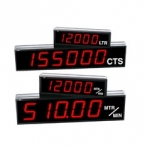
Sensors are devices or components that detect and measure physical, chemical, or environmental properties and convert them into electrical signals or other forms of readable data. They play a critical role in collecting information from the surrounding environment and enabling systems to respond and interact with the physical world. Sensors are utilized in numerous applications across various industries, including automotive, healthcare, manufacturing, agriculture, and more.
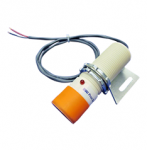
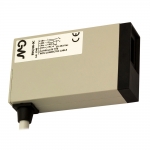
Industrial sensors are the primary components of automated systems, responsible for detecting physical changes and converting them into electrical signals for process control. For engineers and procurement officers, selecting the correct sensing technology requires a technical assessment of target material, detection range, response time, and environmental resistance. Our comprehensive inventory of sensors is engineered for precision in factory automation, access control, and quality inspection. Each category is designed to meet rigorous industrial standards, ensuring high repeatability and integration with modern control architectures.
Effective sensor deployment minimizes downtime and enhances the accuracy of high speed production lines. By utilizing advanced detection methods such as inductive, capacitive, and optical sensing, facilities can achieve granular control over mechanical operations and safety protocols.
Speed Switches and Speed Sensors
Speed Switches and Speed Sensors →
Vision Sensors
Vision Sensors →
IO-Link Master
IO-Link Master →
Photoelectric Sensors
Photoelectric Sensors →
Miniature Sensor
Miniature Sensor →
Industrial Compact Sensor
Industrial Compact Sensor →
Distance Sensor
Distance Sensor →
Contrast Photoelectric Sensor
Contrast Photoelectric Sensor →
Inductive Sensor
Inductive Sensor →
Area Sensor
Area Sensor →
Optical Fiber Amplifier
Optical Fiber Amplifier →
Safety Sensor
Safety Sensor →
Relay module
Relay module →
Ultrasonic Sensor
Ultrasonic Sensor →
Slot Sensor
Slot Sensor →
Vibration Sensor
Vibration Sensor →
Time of Flight Sensor
Time of Flight Sensor →
Digital/Analog Sensor
Digital/Analog Sensor →
Focaliser
Focaliser →
Reflective Accessories
Reflective Accessories →
Monarch Instrument Sensors
Monarch Instrument Sensors →
Sensor Product Classifications
Speed Switches and Speed Sensors
Speed switches and sensors are designed to monitor the rotational or linear velocity of mechanical components. These devices identify under speed or over speed conditions in motors, conveyors, and fans. By providing real time feedback on shaft rotation, these sensors prevent mechanical damage caused by jams or belt slippage. They are available in both contact and non contact configurations to suit different mounting requirements.
Vision Sensors
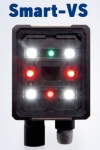
Vision sensors integrate a camera and image processing logic within a single housing to perform complex inspection tasks. These units are utilized for presence detection, part orientation, and character recognition. Unlike standard sensors, vision systems can analyze multiple features of a target simultaneously, making them ideal for high speed sorting and quality assurance in packaging and electronics manufacturing.
IO-Link Master
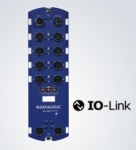
The IO Link Master serves as a communication gateway between IO Link capable sensors and the fieldbus system. It facilitates bidirectional data exchange, allowing for remote parameterization and advanced diagnostics. By utilizing an IO Link Master, maintenance teams can monitor sensor health and configuration from a centralized PLC, reducing the time required for sensor replacement and system commissioning.
Photoelectric Sensors
Photoelectric sensors utilize light beams to detect the presence or absence of an object. This category includes through beam, retro reflective, and diffuse reflective models. These sensors are essential for long range detection and are commonly applied in gate automation, conveyor control, and pallet detection. They offer high immunity to electromagnetic interference and fast response times.
Miniature Sensor
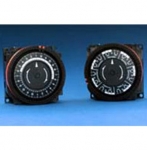
Miniature sensors are engineered for applications with severe space constraints. Despite their small form factor, these units maintain high performance characteristics and reliable sensing ranges. They are frequently used in medical equipment, robotic grippers, and precision electronics assembly where standard sized sensors cannot be accommodated.
Industrial Compact Sensor
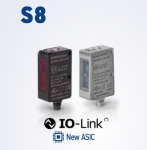
Industrial compact sensors provide a balance between small size and robust sensing capabilities. These units are designed for easy integration into standard machine frames and control panels. They often feature standardized mounting holes and M8 or M12 connectors, simplifying the installation process for original equipment manufacturers (OEMs).
Distance Sensor
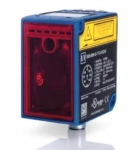
Distance sensors provide precise measurement of the displacement between the sensor and a target. Utilizing laser or LED technology, these sensors output an analog or digital signal proportional to the distance. They are critical for level control, stack height monitoring, and positioning tasks in automated warehousing.
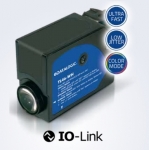
Contrast Photoelectric Sensor
Contrast sensors are specialized photoelectric units designed to detect subtle differences in color or grayscale between a target and its background. They are primarily used in the printing and packaging industries to identify registration marks on moving webs, ensuring precise cutting and folding operations.
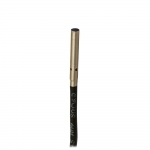
Inductive Sensor
Inductive sensors are non contact devices used to detect metallic objects. They operate by generating an electromagnetic field and sensing the eddy current losses induced when a metal target enters the field. These sensors are highly durable, resistant to oil and dust, and are the industry standard for limit switching on machine tools.
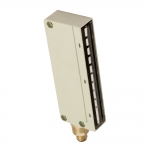
Area Sensor
Area sensors, or light grids, utilize multiple light beams to monitor a two dimensional plane. They are used for detecting irregularly shaped objects or for guarding large openings. In access control, area sensors ensure that objects or personnel are detected regardless of their specific position within the monitored zone.
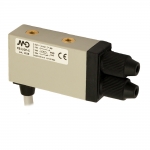
Optical Fiber Amplifier
Optical fiber amplifiers are used in conjunction with fiber optic cables to provide sensing in high temperature or restricted access areas. The amplifier unit stays in the control cabinet while the flexible fiber probes are routed to the sensing point. This setup is ideal for detecting small parts in vacuum chambers or high temperature ovens.
Safety Sensor
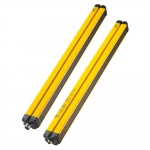
Safety sensors are designed with redundant circuitry and self monitoring features to protect personnel from hazardous machinery. This category includes safety light curtains and interlocking switches. These sensors meet high Safety Integrity Level (SIL) ratings and ensure that a machine enters a safe state if a breach is detected.
Relay module
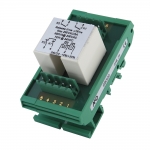
Relay modules provide the interface between low power sensor signals and high power actuators. They provide galvanic isolation and allow for the switching of AC or DC loads. These modules are available in various contact configurations to support complex logic requirements in control panels.
Ultrasonic Sensor
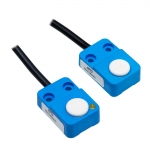
Ultrasonic sensors utilize sound waves to detect objects and measure distances. They are unaffected by the color or transparency of the target, making them ideal for detecting clear glass, liquid levels, and highly reflective surfaces. They perform reliably in dusty or smoky environments where optical sensors may fail.
Slot Sensor
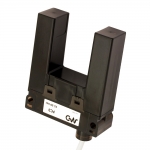
Slot sensors, also known as fork sensors, feature a transmitter and receiver housed in a single U shaped frame. The fixed alignment simplifies installation as no beam adjustment is required. These are commonly used for label detection and counting small parts on a rail.
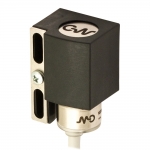
Vibration Sensor
Vibration sensors monitor the mechanical health of rotating equipment by measuring acceleration or velocity. Early detection of abnormal vibration patterns allows for predictive maintenance, preventing catastrophic failure of motors, pumps, and gearboxes.
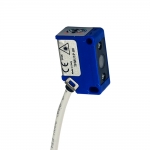
Time of Flight Sensor
Time of Flight (ToF) sensors measure distance by timing how long it takes for a light pulse to travel to a target and back. This technology provides high accuracy over long ranges and is less affected by target surface characteristics than traditional triangulation sensors.
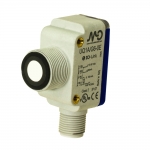
Digital/Analog Sensor
This category includes sensors that offer dual output capabilities. Digital outputs provide simple on off logic, while analog outputs (4 to 20mA or 0 to 10V) provide continuous data for process monitoring. This versatility allows a single sensor to fulfill both control and feedback roles.
Focaliser
Focalisers are optical accessories used to narrow or shape the light beam of a photoelectric sensor. By focusing the light into a smaller spot, these accessories increase sensing precision and allow for the detection of extremely small objects or features.
Reflective Accessories
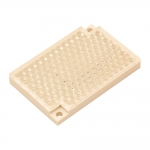
Reflective accessories include high quality prisms and tapes designed for use with retro reflective sensors. The efficiency of the sensing path depends on the quality of the reflector. Our accessories are designed for various distances and environmental conditions, including high temperature and chemical washdown.
Monarch Instrument Sensors
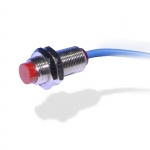
Monarch Instrument sensors are specialized tools for tachometry and vibration analysis. These include high precision optical and laser sensors designed for portable or permanent rotational speed measurement. They are widely used in maintenance and balancing operations.
Engineering and Procurement Specifications
When specifying a sensor, technical personnel must evaluate the target material, the required sensing distance, and the output logic (NPN or PNP). Environmental factors such as ambient light, temperature, and moisture levels must also be considered to ensure the longevity of the device.
Manufactures
Sensors are devices or components that detect and measure physical, chemical, or environmental properties and convert them into electrical signals or other forms of readable data. They play a critical role in collecting information from the surrounding environment and enabling systems to respond and interact with the physical world. Sensors are utilized in numerous applications across various industries, including automotive, healthcare, manufacturing, agriculture, and more.